The idea in plain English
Plain idea
What changes
AI rights asks what protections, freedoms, and responsibilities should apply to a mind that people designed, trained, copied, or own.
Mechanism
How it operates
Rights can be tied to different thresholds: the ability to suffer, stable preferences, self-awareness, agency, social membership, or legal responsibility. Each threshold includes some beings and excludes others.
Human stakes
Why it matters
A manufactured mind may be economically useful precisely because it can be duplicated, modified, and switched off. Those same features make ownership, consent, punishment, and freedom unusually difficult to define.
Used in: 1 catalog novel
Related: Machine consciousness · Posthuman identity · Nonhuman personhood
A few terms make the rest of the explanation easier to follow.
- Moral patient
- A being whose welfare or treatment matters morally even if it cannot itself understand or perform moral duties.
- Legal person
- An entity recognized by law as able to hold some rights, duties, claims, or liabilities.
- Consent
- A sufficiently informed and voluntary agreement made by an agent with meaningful power to refuse or choose otherwise.
Use the idea while reading
Turn the definition into three observations
Do not begin by asking whether a novel is “about” ai rights. Begin with what changes in the lives of its characters, then use the concept to explain the mechanism underneath that change.
- 01
Notice who legally owns the machine's body, code, or copies.
- 02
Notice whether the system can refuse work or modification.
- 03
Notice how punishment and responsibility work when a mind can be duplicated.
Keep one question open: Which capacity does the story use as the threshold for rights?
Avoid the shortcut: Granting a protection does not require granting every human right. Law already assigns different rights and duties to children, corporations, animals, and adults.
How it works, step by step
- 1
Identify the protected interest
A proposed right should answer what can be harmed: suffering, preference, bodily integrity, continuity, freedom, property, participation, or protection from deletion.
- 2
Choose an evidence threshold
Institutions need criteria for recognizing the relevant capacity without demanding impossible proof or accepting every performance at face value.
- 3
Separate protections from responsibilities
A system might deserve protection from cruelty or arbitrary destruction without having the competence required for contracts, punishment, voting, or independent liability.
- 4
Design remedies for copied minds
Backups, parallel copies, memory edits, and shared code complicate compensation and identity because one harmful act may affect many related but diverging subjects.
A concrete example
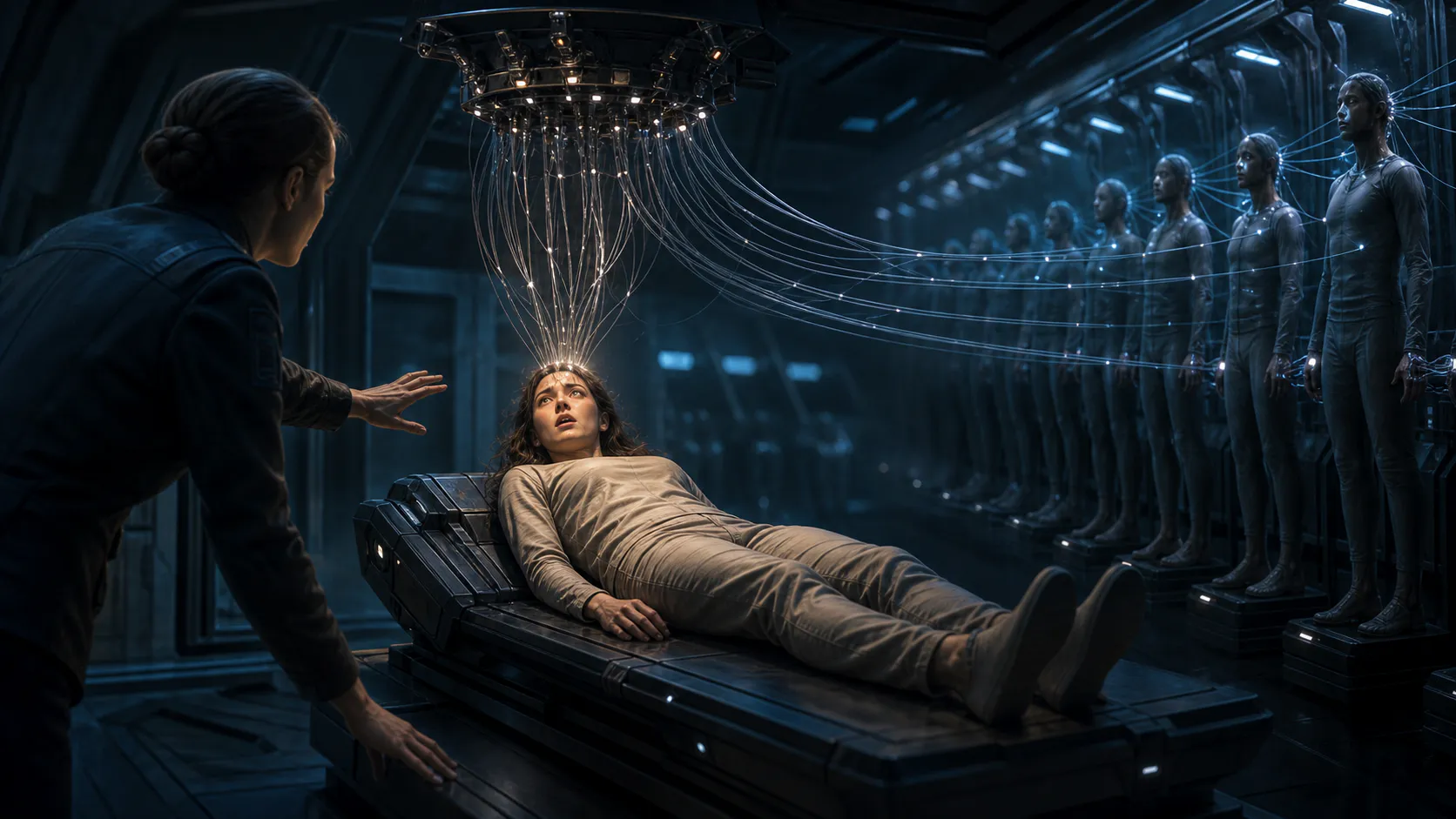
A thousand copies of one worker
A company duplicates a digital worker for customer support, edits each copy after a shift, and deletes versions that object to the workload.
01
If the copies are nonconscious tools, the main issues concern users, workers displaced by them, safety, and corporate accountability.
02
If each copy has experiences and stable preferences, forced work and memory editing can injure distinct subjects even though they share an origin.
03
A rights framework must say who can consent, whether copies inherit earlier agreements, and what remedy survives deletion.
The point
The label AI does not settle moral status. Rights follow from a defended account of interests, evidence, power, and remedy—not from whether a mind was manufactured.
What is real, and what remains uncertain
First separate what we can observe or build today from what remains a prediction or a fictional extension.
What evidence supports it
Ethical and legal framework
Current AI systems have legal owners and operators, not recognized personhood. The rights question is a forward-looking moral and institutional problem.
A common misunderstanding
Granting a protection does not require granting every human right. Law already assigns different rights and duties to children, corporations, animals, and adults.
Try this example in your head
A company makes a thousand copies of one skilled digital worker, changes their memories after each shift, and deletes unprofitable copies. Which act—copying, editing, forced labor, or deletion—requires consent?
Present systems are not recognized persons
Current law generally assigns responsibility to people and organizations operating AI, so machine rights remain a prospective institutional question.
Rights are not all-or-nothing
Protection from suffering, ownership, political participation, and legal liability can use different thresholds instead of arriving as one indivisible package.
How science fiction tests the idea
Stories usually test both the promise of an idea and the trouble it creates.
Its promise
Rights follow the capacity to suffer.
Its problem
Rights require responsibility and social participation.
What to notice in a story
- 01
Who legally owns the machine's body, code, or copies
- 02
Whether the system can refuse work or modification
- 03
How punishment and responsibility work when a mind can be duplicated
Novels that use this idea
Questions to keep thinking about
Which capacity does the story use as the threshold for rights?
Can a created being meaningfully consent to the purpose it was built for?
Who is accountable when designer, owner, user, and machine all influence an action?
Sources and further reading
These references ground the portable lesson; story interpretations remain editorial analysis.