
The idea in plain English
Plain idea
What changes
Weaponized physics uses knowledge of matter, energy, space, or fundamental forces to damage not just targets but the environment or physical conditions on which life depends.
Mechanism
How it operates
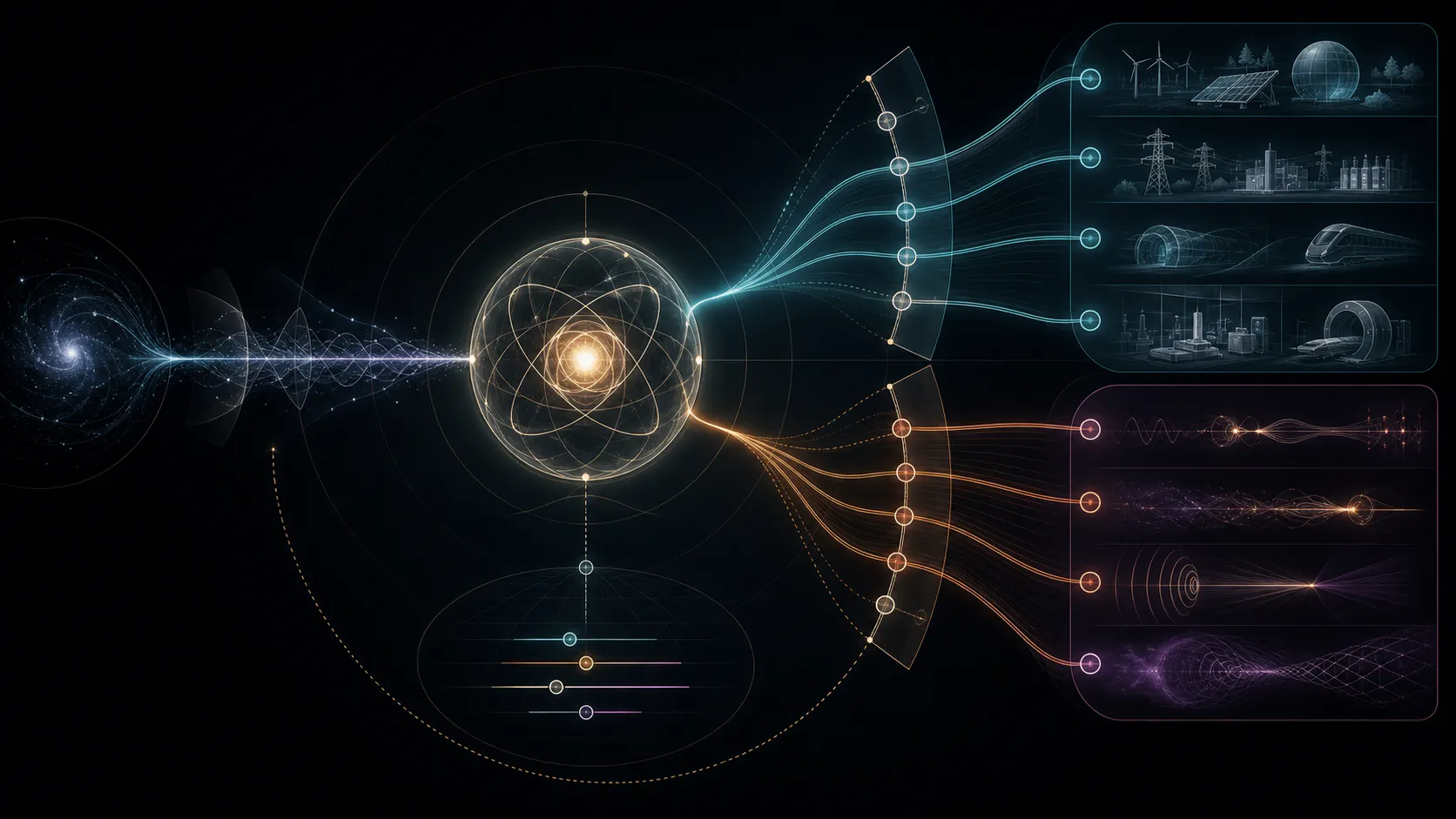
A discovery becomes a weapon when institutions turn an effect into a controllable delivery system, target, doctrine, and chain of command. The same underlying knowledge may support energy, travel, measurement, or destruction.
Human stakes
Why it matters
As destructive scale grows, defense and repair may become impossible. Knowledge that changes planetary or cosmic conditions also creates dual-use dilemmas: suppressing it can block benefits, while spreading it can make irreversible harm easier.
Used in: 3 catalog novels
Related: Scientific blockade · Time travel and temporal displacement · Curvature propulsion
A few terms make the rest of the explanation easier to follow.
- Dual use
- Knowledge, material, or equipment that can support beneficial applications and also enable harmful or military capability.
- Delivery system
- The engineering and operational chain that brings a physical effect to a chosen target at useful scale and timing.
- Proliferation
- The spread of sensitive knowledge, materials, components, or complete capability to additional actors.
- Irreversibility
- A condition in which damage cannot be repaired on relevant human, ecological, or civilizational timescales.
Use the idea while reading
Turn the definition into three observations
Do not begin by asking whether a novel is “about” weaponized physics. Begin with what changes in the lives of its characters, then use the concept to explain the mechanism underneath that change.
- 01
Notice what peaceful and destructive uses share the same knowledge.
- 02
Notice which institution controls deployment and authorization.
- 03
Notice whether damage is local, reversible, containable, or self-propagating.
Keep one question open: At what stage does research become a weapon system?
Avoid the shortcut: Physics is not an actor with intentions. A discovery becomes weaponized through engineering, institutions, access, targeting choices, and political doctrine.
How it works, step by step
- 1
Discover a physical effect
Research identifies a relationship involving matter, energy, forces, radiation, geometry, or information without yet specifying a harmful application.
- 2
Engineer scale and control
Materials, power, precision, containment, repeatability, and a delivery method turn an observation into usable capability.
- 3
Build institutions of access and authorization
Laboratories, supply chains, secrecy, funding, doctrine, safeguards, and command determine who can develop or deploy the effect.
- 4
Assess propagation and recovery
Weaponization becomes especially dangerous when effects spread through atmosphere, ecology, infrastructure, dimensions, or spacetime beyond the intended target.
A concrete example
A reactor principle that can damage an atmosphere
A new reaction provides compact clean energy, but a small change in operating conditions could trigger a self-propagating atmospheric effect.
01
Publishing the mechanism accelerates peaceful energy development and independent safety testing while making harmful experimentation easier.
02
Secrecy reduces immediate spread but concentrates energy access and knowledge inside institutions that may be unaccountable or strategically motivated.
03
Governance must separate ordinary research from materials, scale, and deployment steps that create the catastrophic pathway.
The point
Physics becomes weaponized through an engineered and institutional chain. The policy problem is governing dangerous capability without pretending that knowledge itself has intentions.
What is real, and what remains uncertain
First separate what we can observe or build today from what remains a prediction or a fictional extension.
What evidence supports it
Historical pattern and speculative extension
Nuclear, chemical, and kinetic technologies demonstrate dual use and environment-scale harm. Dimension- or spacetime-altering weapons remain speculative.
A common misunderstanding
Physics is not an actor with intentions. A discovery becomes weaponized through engineering, institutions, access, targeting choices, and political doctrine.
Try this example in your head
A new reactor principle can provide clean energy but a small modification destabilizes a planet's atmosphere. Publishing enables rapid adoption; secrecy gives a few institutions permanent control.
Risk varies along the development chain
A general principle, a specialized material, an integrated device, and an operational doctrine create different levels of immediate danger and governability.
Suppression also has costs
Restricting research can delay medicine, energy, monitoring, defense, and independent verification while strengthening the monopoly of existing powers.
How science fiction tests the idea
Stories usually test both the promise of an idea and the trouble it creates.
Its promise
Advanced knowledge inevitably becomes part of strategic competition.
Its problem
Physics only becomes a weapon through institutions and choices that can still be challenged.
What to notice in a story
- 01
What peaceful and destructive uses share the same knowledge
- 02
Which institution controls deployment and authorization
- 03
Whether damage is local, reversible, containable, or self-propagating
Novels that use this idea
Civilization scale
Balanced · Layered
Caliban's War
A vanished child, a Martian marine's impossible battlefield report, and a political struggle on Earth pull the Rocinante toward another protomolecule crisis.
Cosmic scale
Dark · Demanding
Death’s End
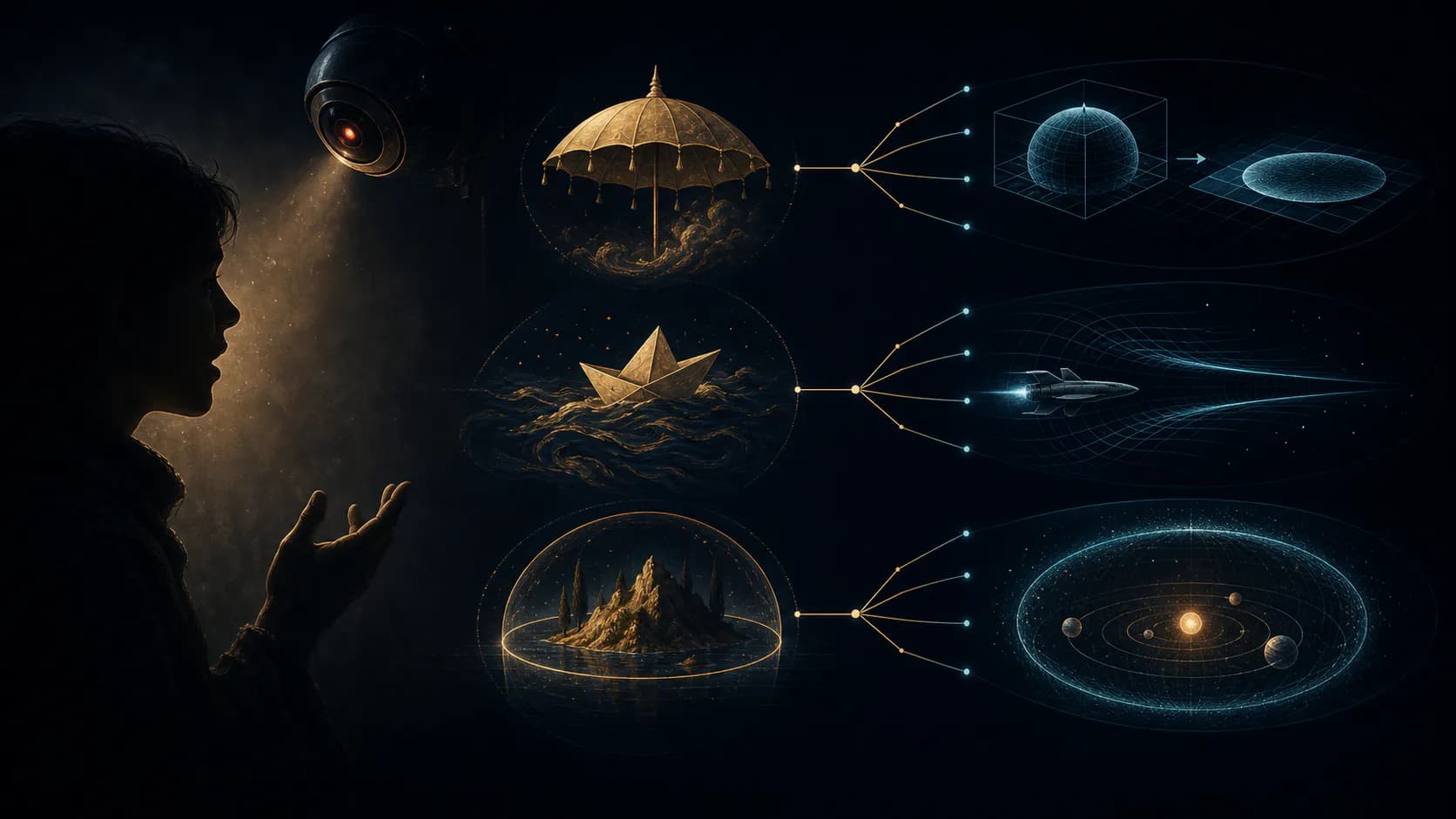
Advanced civilizations attack not only matter but the dimensional conditions in which matter and defenses exist.
Visual example · How a fairy tale carries monitored physics
Civilization scale
Dark · Layered
The Killing Star
A near-light-speed attack erases human civilization before anyone can respond. The scattered survivors must learn why an unknown species wants every last witness gone.
Questions to keep thinking about
At what stage does research become a weapon system?
Can knowledge be governed without concentrating it in an unaccountable monopoly?
What kind of defense is possible when the environment itself is the target?
Sources and further reading
These references ground the portable lesson; story interpretations remain editorial analysis.