
The idea in plain English
Plain idea
What changes
Emergency governance changes ordinary decision-making so institutions can act quickly and coordinate resources during a severe, time-sensitive threat.
Mechanism
How it operates
Power may be centralized, procedures shortened, resources requisitioned, and rights temporarily restricted. Legitimacy depends not only on speed but on evidence, oversight, proportionality, distribution of burdens, and a credible path back to ordinary rule.
Human stakes
Why it matters
Delay can cost lives, but crisis authority can also make mistakes at enormous scale and silence the people most affected. Temporary systems often create interests that want the emergency—and their power—to continue.
Used in: 7 catalog novels
Related: Climate survival · Science as infrastructure · Ideological capture
A few terms make the rest of the explanation easier to follow.
- Emergency power
- A temporary legal or institutional authority activated to respond faster or more broadly than ordinary procedure allows.
- Proportionality
- The requirement that a restrictive or coercive measure be no broader or more harmful than the threat justifies.
- Sunset rule
- A condition that ends or requires formal renewal of extraordinary authority after a stated time or trigger.
- Preparedness
- Capabilities, plans, trained people, information systems, and resources established before a crisis begins.
Use the idea while reading
Turn the definition into three observations
Do not begin by asking whether a novel is “about” emergency governance. Begin with what changes in the lives of its characters, then use the concept to explain the mechanism underneath that change.
- 01
Notice who declares the emergency and what evidence activates special powers.
- 02
Notice which ordinary rights or procedures are suspended.
- 03
Notice what oversight, sunset rule, or restoration process exists.
Keep one question open: Which delay is genuinely dangerous and which deliberation prevents harm?
Avoid the shortcut: The choice is not simply fast dictatorship versus slow democracy. Prepared rules, distributed expertise, transparent triggers, and review can support both speed and accountability.
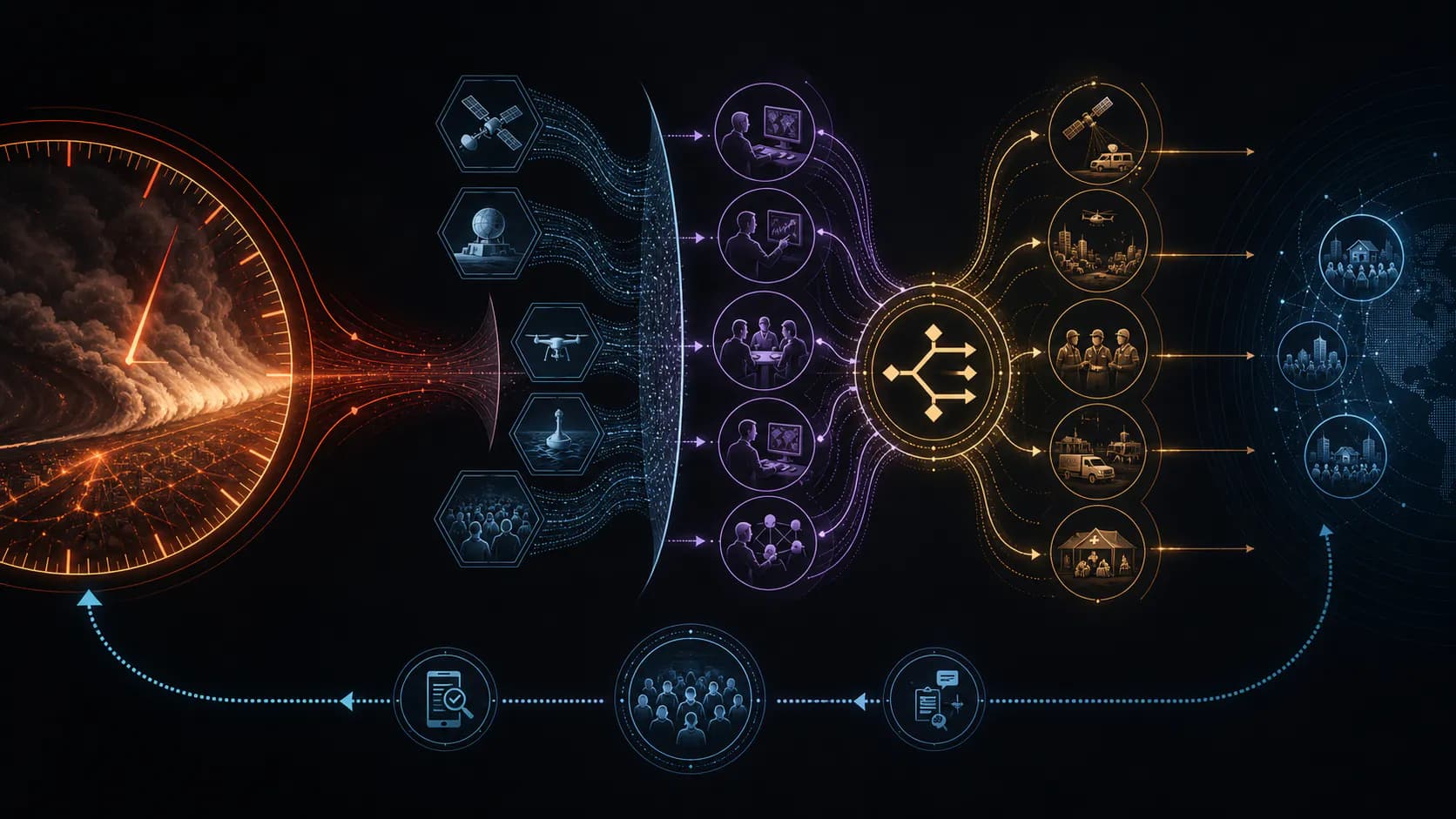
How it works, step by step
- 1
Define the threat and activation trigger
Evidence and law determine who may declare an emergency, what geographic or institutional scope applies, and which special powers become available.
- 2
Coordinate information and resources
Authorities combine surveillance, expert advice, local reports, finance, logistics, communication, and essential services under severe time pressure.
- 3
Choose proportionate interventions
Restrictions, requisitions, triage, and priority rules must connect to the hazard while distributing burdens openly and preserving feasible alternatives.
- 4
Review, adapt, and relinquish power
New evidence, community feedback, oversight, sunset clauses, and after-action review determine whether measures change, continue, or return to ordinary governance.
A concrete example
Forty-eight hours before a solar storm
Forecasts indicate that a severe solar storm may damage grids, satellites, hospitals, and communications across several regions.
01
An emergency authority redirects transport and power equipment using forecasts that remain uncertain but leave little preparation time.
02
Hospitals and local operators need clear priorities, communication channels, and discretion because the central office cannot observe every failure.
03
Orders should expire or be reviewed when the storm passes, with records showing who was burdened, which evidence was used, and what failed.
The point
Emergency governance works through prepared authority, coordination, and feedback—not speed alone. Legitimacy depends on evidence, fairness, oversight, and an exit from extraordinary power.
What is real, and what remains uncertain
First separate what we can observe or build today from what remains a prediction or a fictional extension.
What evidence supports it
Established political framework
States and institutions use emergency powers during wars, disasters, epidemics, and financial crises. Science fiction tests those arrangements under larger or longer threats.
A common misunderstanding
The choice is not simply fast dictatorship versus slow democracy. Prepared rules, distributed expertise, transparent triggers, and review can support both speed and accountability.
Try this example in your head
A solar storm will disable power grids in forty-eight hours. One administrator can redirect every transport and hospital, but no court can review the orders until after the crisis.
Centralization does not guarantee coordination
A powerful office can still act on incomplete data, overwhelm local knowledge, or create bottlenecks if roles and communication were not prepared.
Temporary powers can become durable
Institutions, contracts, surveillance systems, and political incentives created during crisis may persist after the original justification has weakened.
How science fiction tests the idea
Stories usually test both the promise of an idea and the trouble it creates.
Its promise
Concentrated authority can be justified when delay threatens mass death.
Its problem
Crisis power can erase consent and accountability in the name of survival.
What to notice in a story
- 01
Who declares the emergency and what evidence activates special powers
- 02
Which ordinary rights or procedures are suspended
- 03
What oversight, sunset rule, or restoration process exists
Novels that use this idea
Cosmic scale
Cautious · Layered
Abaddon's Gate
When an alien Ring opens beyond Uranus, a human flotilla carries its old rivalries into a place whose physical rules no one understands.
Civilization scale
Balanced · Layered
Babylon's Ashes
After the attacks on Earth, the Free Navy controls the Belt and the routes to new worlds, forcing old enemies to build an alliance that can survive its own history.
Civilization scale
Dark · Accessible
Ender's Game
A six-year-old boy is sent to an orbital war school because adults believe he can save Earth. Every apparent game teaches him to win while hiding what his victories really cost.
Societal scale
Cautious · Layered
Parable of the Sower
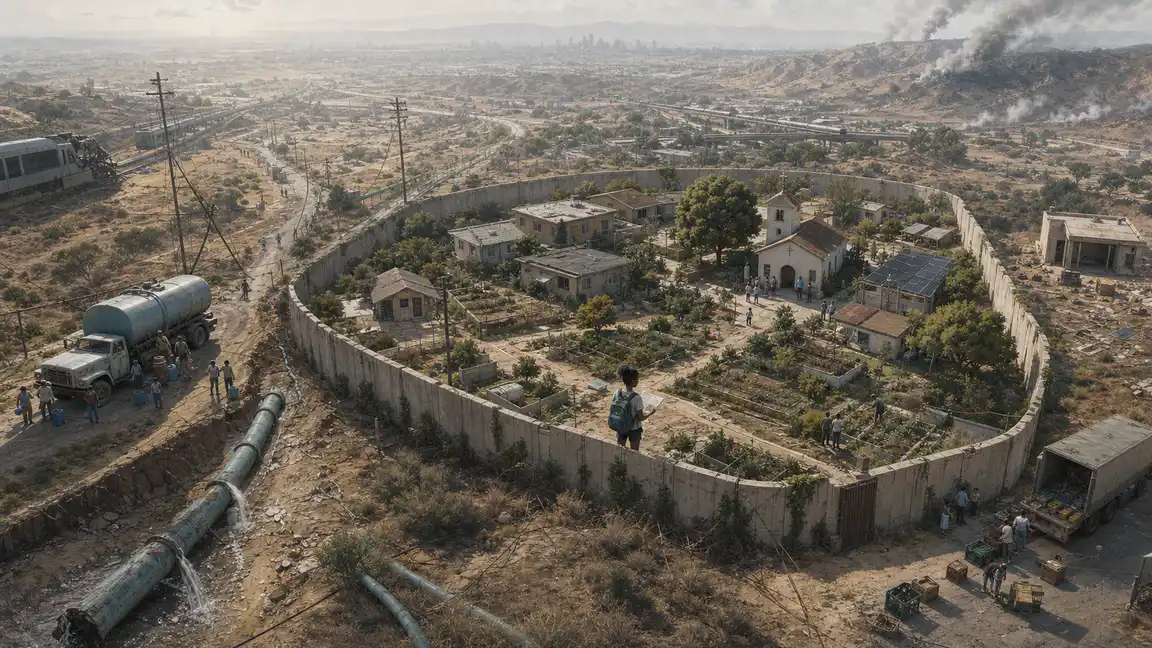
As public authority fragments, neighborhood patrols, armed travelers, corporations, landowners, and ad hoc groups make rules about protection and exclusion without a stable institution able to guarantee rights.
Visual example · The wall protects a place, not the systems that keep it alive
Civilization scale
Hopeful · Layered
Project Hail Mary
Planetary survival gives one administrator extraordinary reach, forcing results while steadily eroding ordinary consent and accountability.
Cosmic scale
Cautious · Layered
Pushing Ice
A mining crew chases Saturn's departing moon Janus for a brief look at an alien machine. The chase becomes a one-way journey that turns a shipboard disagreement into a civilization's history.
Societal scale
Balanced · Demanding
The Eternal Flame
Population controls show how easily a real closed-system constraint can authorize violence when institutions mistake urgency for unlimited moral permission.
Questions to keep thinking about
Which delay is genuinely dangerous and which deliberation prevents harm?
Who carries the sacrifice demanded by rapid action?
What would prove that emergency authority is no longer necessary?
Sources and further reading
These references ground the portable lesson; story interpretations remain editorial analysis.
World Health Organization
Framework for Health Emergency Preparedness and Response Capabilities
MechanismReality checkHuman stakesLimitsWorld Health Organization Regional Office for Europe
Preparedness 2.0
MechanismReality checkLimitsWorld Health Organization
Health Emergency and Disaster Risk Management: Ethics
Human stakesLimits